Automated Content Generation & Publishing System
wordpress-automation
00
problem
Publishing consistent, high-quality content is time-consuming and repetitive. Writing articles, formatting them for the web, sourcing images, and publishing on a schedule requires ongoing manual effort and creates friction for small teams and solo operators. As a result, content schedules slip, quality becomes inconsistent, and websites fail to stay fresh and engaging. Traditional tools help with pieces of the process, but they don’t remove the operational overhead of managing content end to end.
solution
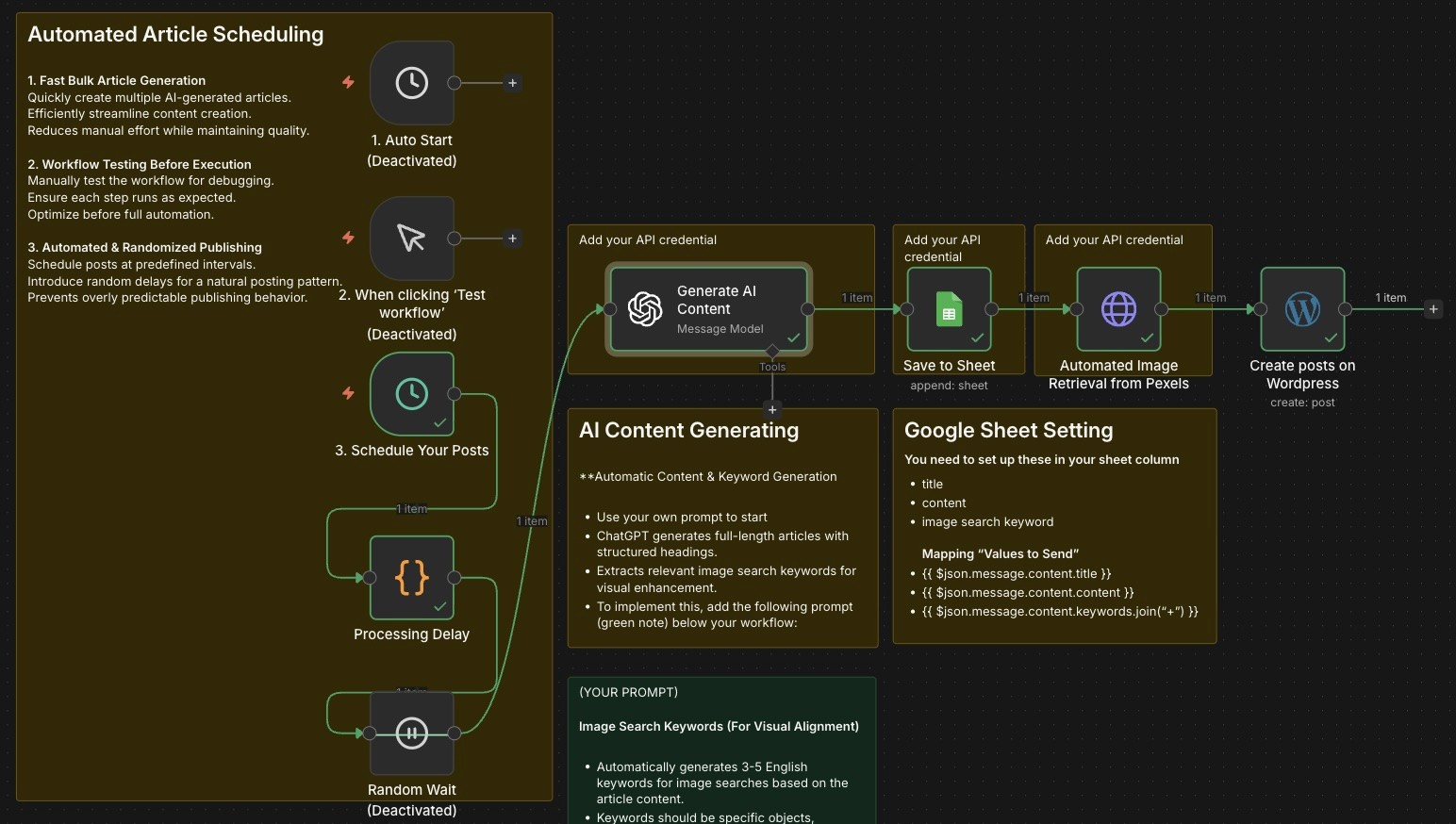
I built an automated content generation and publishing system that handles the entire workflow from creation to publication. The system uses AI to generate structured, HTML-ready articles, derives relevant image keywords, retrieves matching visuals, and publishes posts directly to WordPress on a set schedule. Content is logged for visibility and monitoring, and the workflow includes safeguards to reduce failures and maintain consistency. This approach removes manual work while keeping the system flexible and easy to adjust as requirements change.
This project began as a way to remove the repetitive operational work involved in publishing content while keeping quality and consistency high. Rather than building a one-off script, I approached it as a system that needed to run reliably in a real production environment. The focus was on automating the entire content lifecycle, not just generating text.

At a high level, the workflow runs on a scheduled trigger and uses AI to generate a fully structured article, including a headline, clean HTML formatting, and relevant image keywords. The generated content is logged for visibility and tracking, then paired with a contextually relevant image sourced automatically based on the article. Once assembled, the post is published directly to WordPress through the platform’s API, allowing content to go live without manual involvement.
The system was designed with monitoring and iteration in mind. Because it relies on multiple external services, it requires ongoing oversight to handle API limits, formatting changes, and evolving content requirements. By building in checkpoints and keeping the workflow flexible, the automation can be refined over time based on feedback, platform updates, and performance making it a durable solution rather than a fragile setup.
01
see also